Skip to product information
1 of 3

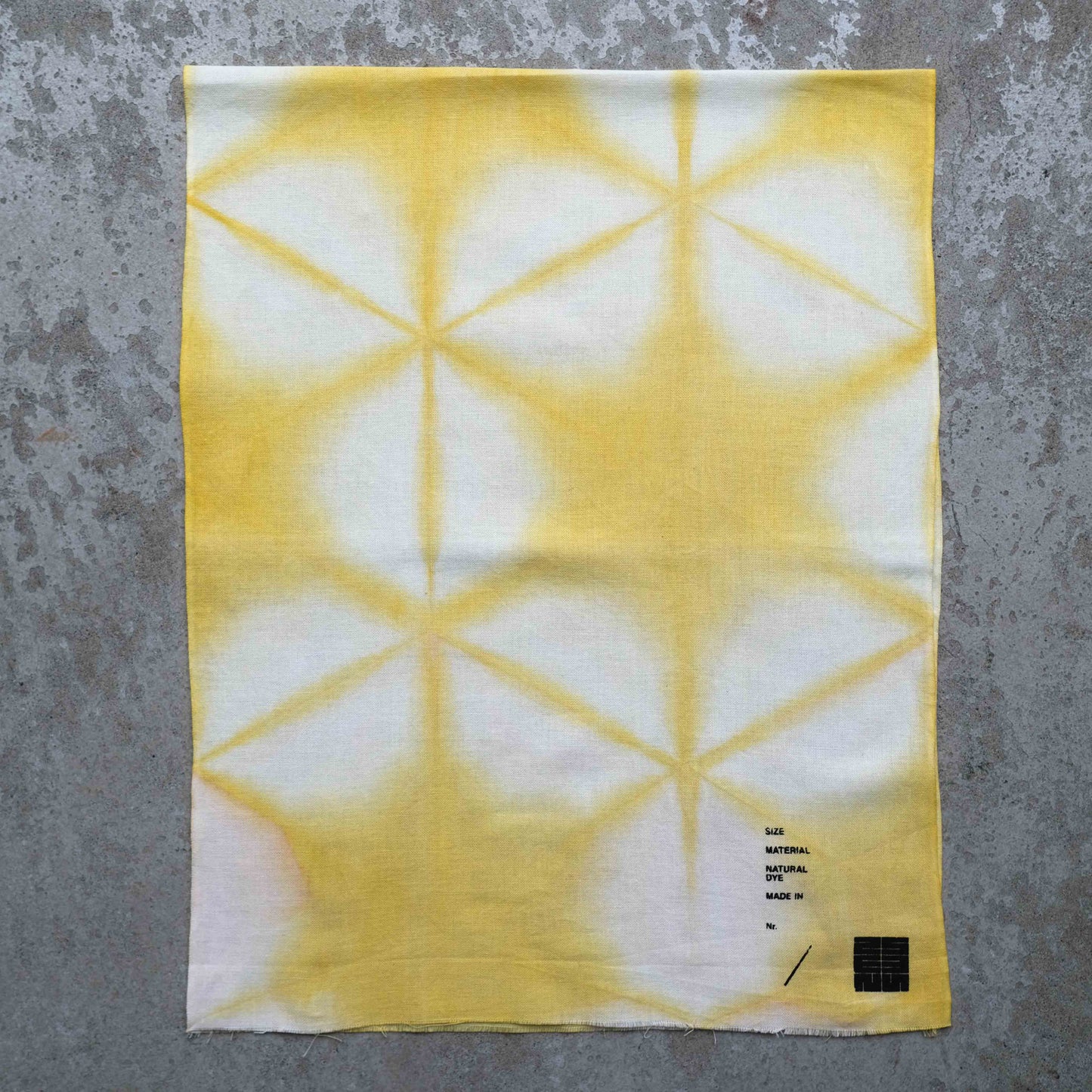
Natural Dye Itajime Shibori Japanese Tenugui Fabric

Natural Dye Itajime Shibori Japanese Tenugui Fabric

  • Dyed by hand with natural dyes
  • 100% breathable loosely woven cotton fabric
  • Entirely made and dyed in Japan
Regular price ¥2,500 JPY
Regular price Sale price ¥2,500 JPY
Sale Sold out
Taxes included. Shipping calculated at checkout.
Natural Dye Color: Orange Madder

Natural dye cotton Tenugui (Japanese towel) made and dyed in Japan. Dyed with the Japanese itajime shibori technique. The fabric is folded into a triangle and sandwiched between wooden blocks in various shapes. Each shape creates a different geometric pattern on the fabric. 

Tenugui are a part of most Japanese people in daily life. It has a multipurpose use to be worn around the head, neck or even for cleaning. The thin and cool fabric dries quickly and is an ideal accessory for in summer. 

  • Natural Fibers Biodegradable fabric, made locally in Japan. Comfortable and breathable.
  • One of a kind Each pair is hand-dyed by me and each has a unique pattern
  • All natural dyes No chemical waste water and chemical dyes reaching our skin and pores.

International Shipping

All products are shipped internationally by Japan Post Services with tracking. The rates are based on the weight of your order. For example, the international shipping rates to Europe start at 1,240 yen (€6,75 / $7,75) for a package of 200 gram which equals two pairs of socks.

Please keep in mind that the shipping rates will increase when the weight of your order increases.

For an accurate rate of your shipping costs, please add your desired products to your shopping cart, fill in your address and check the rates before check out.

Japan Shipping

All products are shipped domestically by Japan Post Services with or without tracking. The rates are based on the weight and size of your order. For example, a pair of socks can be shipped for 210 yen without tracking, or for 430 yen with tracking. For orders that are of bigger size, I will use yuu packet.

Please keep in mind that the shipping rates will increase when the weight of your order increases.

For an accurate rate of your shipping costs, please add your desired products to your shopping cart, fill in your address and check the rates before check out.

Product Care

Natural dyed items require a little more attention and love when washing and handling these items. To keep your colors as bright as possible, please pay attention to the following washing instructions.

-How to wash-

It is recommended to launder with ph neutral detergent, which is neither acidic nor alkaline. Some natural dyes are sensitive to unbalanced acidic and alkaline ph levels. Using unbalanced PH detergent could fade or shift the colors of your product.

Both hand wash and the washing machine are fine to use.

Hand wash:

Dissolve a small amount of neutral detergent in lukewarm water and gently press and wash. Keep in water for 15 minutes and done!

Washing-machine

A normal spin with ph neutral detergent is completely fine.

After laundering, immediately reshape and flatten the garment, then dry in the shade (natural dyes are vulnerable to the sun and ultraviolet rays, there please dry your garment inside or in the shade).

Please launder separately from white or light-colored items as natural colors may bleed.

View full details

Natural Dyes

Natural dyes are all fully biodegradable and won’t harm the environment. They do not create chemical waste water and chemical dyes reaching our skin and pores. Natural dyes are non-toxic to the maker and the user and less likely to cause allergic reactions. In certain cultures it is believed that natural dyes like Japanese indigo protect the wearer of insects and give a cooling feeling.

Natural Fibers

To match my natural dyes and create biodegradable products, I use as much natural fibers as I can. Natural fibers are comfortable to the skin of the user and breathable. These fibers are finite, they come from nature and will once return to nature.
Japanese Supply Chain

I make and source all my products in Japan. By having a local supply chain, I minimise transportation-related emissions and have control and close contact with my suppliers. Besides, Japanese made products have a strict quality control and value craftsmanship.